TERROIR AND CONVICTIONS
Understanding our soils to reveal our wines
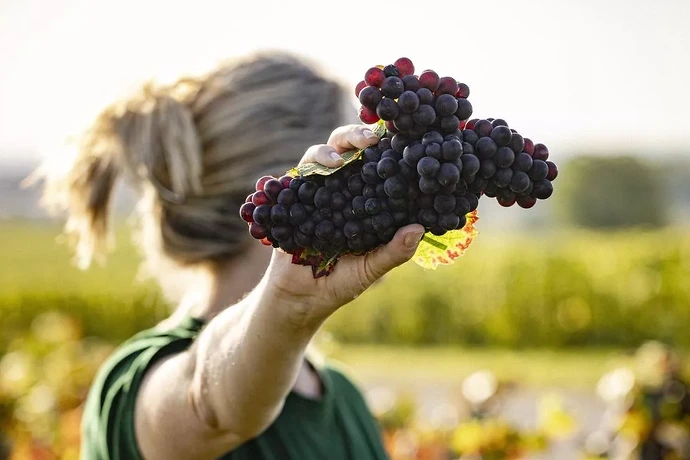
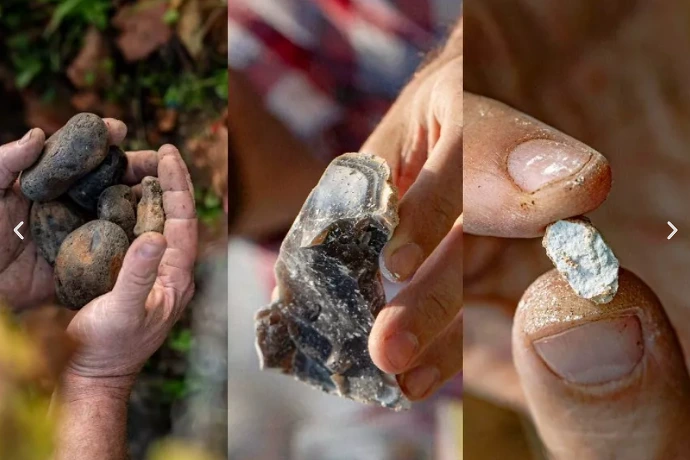
Driven by our desire to truly understand our terroir, we carried out 150 soil core samples and four soil profile studies, as well as a precise mapping of our vineyards with Olivier, our agricultural engineer. This allows us to adapt our plant material, vineyard practices and winemaking methods to the characteristics of each site. Our terroir is remarkably diverse: within just a few kilometres, soils can change from clay to sand, bringing great aromatic complexity and distinctive character to our cuvées. Chardonnay expresses remarkable finesse and minerality from the chalky soils, while flint pebbles give Pinot Noir its power and vinous character.
From iconic to lesser-known grape varieties
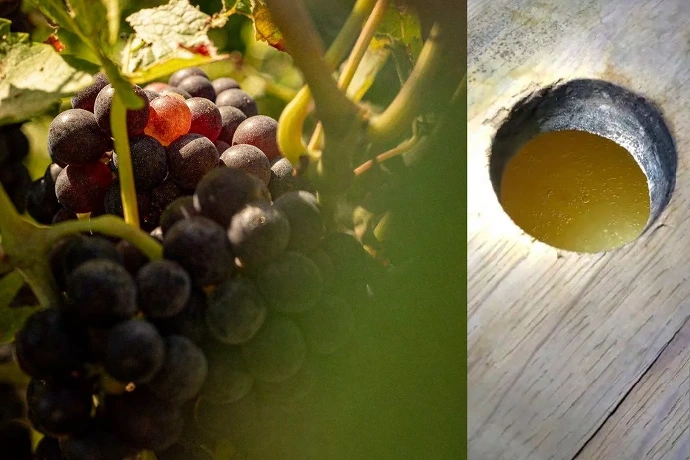
We work primarily with Chardonnay and Pinot Noir, two of Champagne’s emblematic grape varieties. We also cultivate Petit Meslier and Pinot Blanc, rarer varieties that bring an additional touch of originality and complexity to our wines.
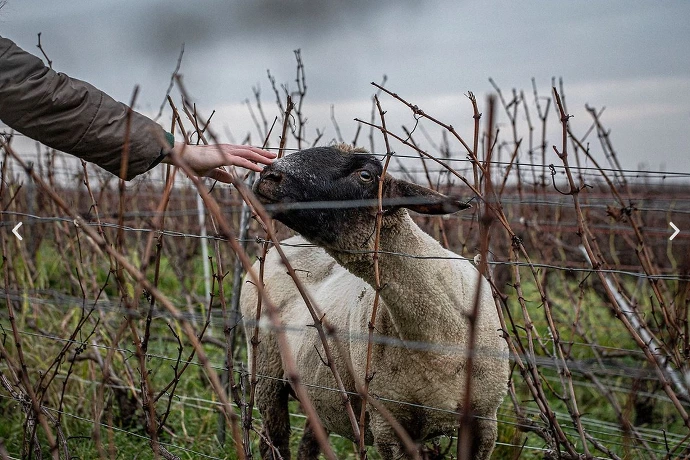
Ground cover, eco-grazing, solar panels…
Certified HVE by the French Ministry of
Agriculture, our wine estate is self-sufficient in electricity. We also produce
our own fermented nettle infusion, practise vineyard ground cover – including
with our own agricultural wheat – and organise annual eco-grazing with our
shepherd and his sheep.
We explore best practices from organic
viticulture and remain particularly attentive to our environmental impact.
Massal selection: resilience and diversity
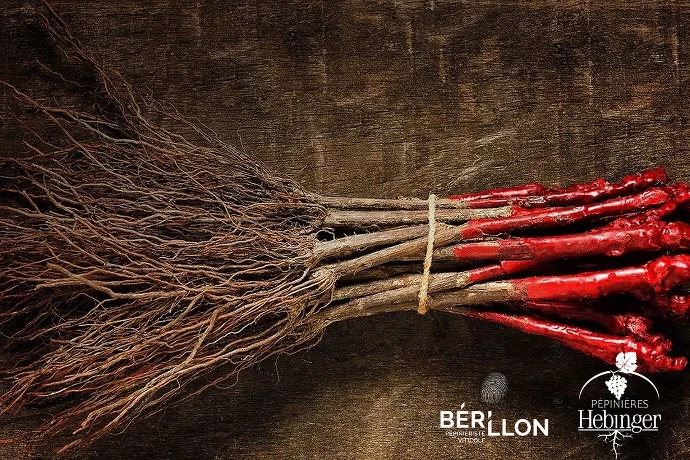
In partnership with two renowned vine nurseries, we plant exclusively using massal selection, combining hundreds of genetically different individual vines. This diversity and genetic richness provide greater resilience, helping our vineyards age better and adapt to changing climatic conditions.
Harvesting in small 16 kg crates
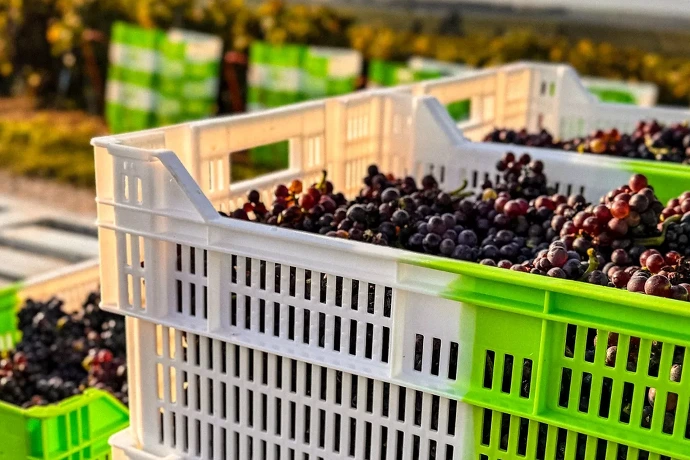
To preserve the quality of our harvest, some of our grapes are picked into small crates, preventing them from being crushed. The grapes arrive at the press intact and are immediately cooled. Thanks to this method, our harvesters no longer need to carry traditional picking baskets. Our commitment to responsible practices therefore extends not only to the environment, but also to our employees and everyone involved in our work.
L’inox au service
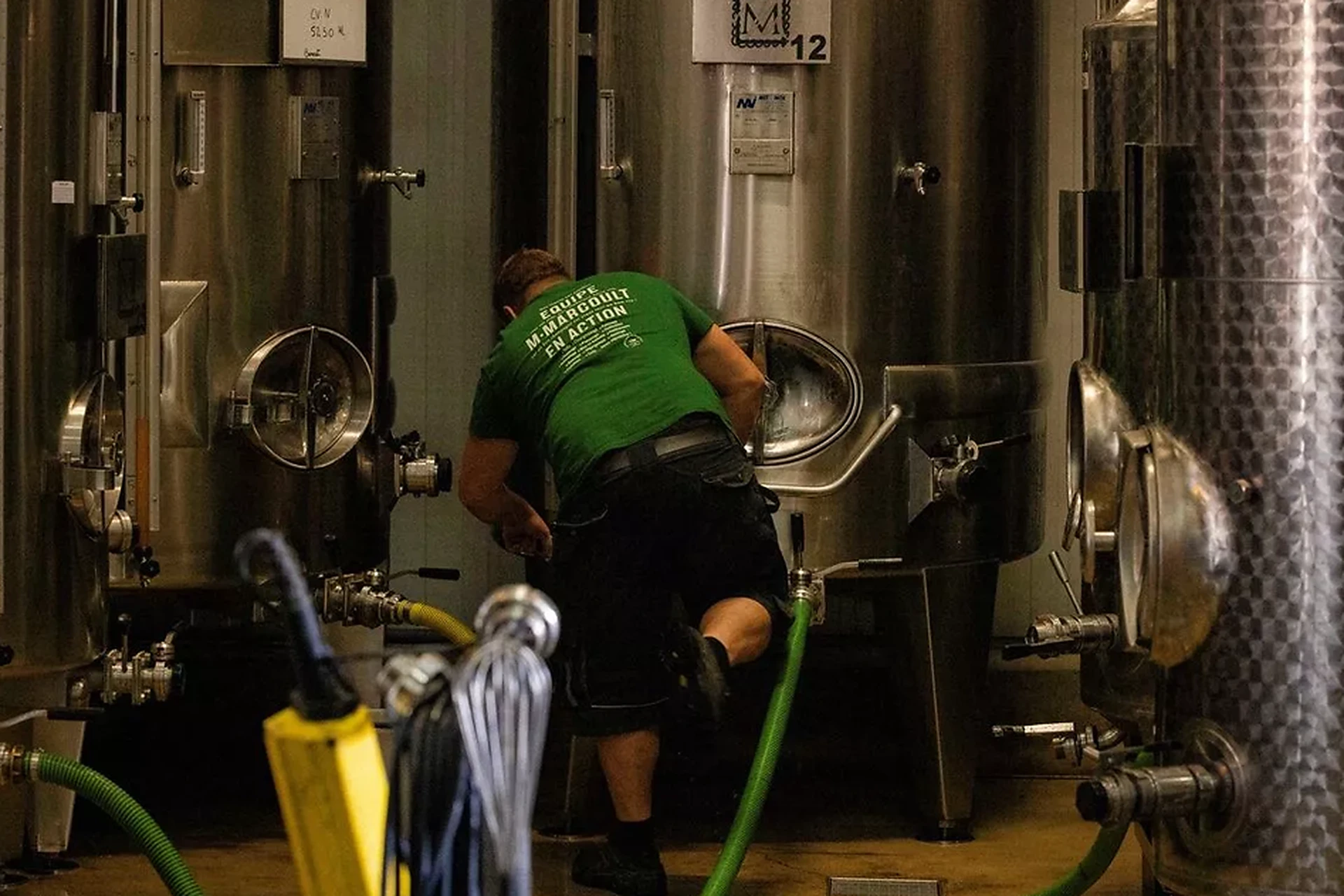
Stainless steel in the service of precision
Stainless steel is our ally in achieving purity
and precision. Completely neutral and without aromatic influence, it ensures
impeccable hygiene while preserving the integrity of the fruit.
It enhances the pure expression of each grape
variety and allows us to create precise, authentic wines of crystalline
clarity.
Wood in the cellar
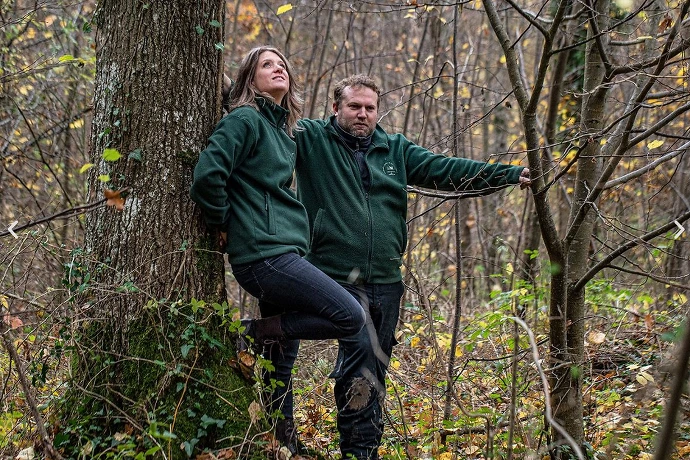
Together with our artisan cooper, we select our oak and acacia trees while they are still standing in the Traconne state forest, less than five kilometres from our estate.
The logs are then transformed into staves and ultimately into barrels by our Master Cooper – Meilleur Ouvrier de France 2007 – at the Tonnellerie de Champagne. Custom-made according to our requirements for shape, capacity and toasting, each barrel is personally assessed by us through its aromas.
From the very creation of our barrels, the
expertise and passion of the Marcoult family are fully expressed. Our wood is
carefully selected according to the nature of the soil in which it grew and its
quality, creating a perfect harmony with our wines.
Each barrel thus becomes an extension of the
terroir, revealing balance and harmony.
ORIGINAL WINEMAKING
A spherical approach to winemaking
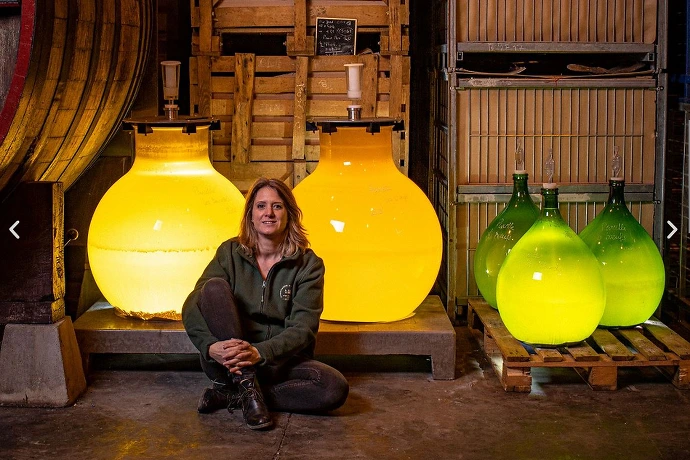
The 220-litre Wineglobes and 50-litre
Dames-Jeannes are Florence’s domain. Their transparency allows her to guide the
vinification by sight and aroma, much as she does when cooking.
Glass, a noble material, enables precise and
natural winemaking while revealing the pure, fresh expression of the grapes.
Its spherical shape encourages circular movements within the wine, bringing
texture and roundness.
These Wineglobes also ensure impeccable hygiene
without cleaning residues and are produced in Gironde, France.
Natural mineral sulphur
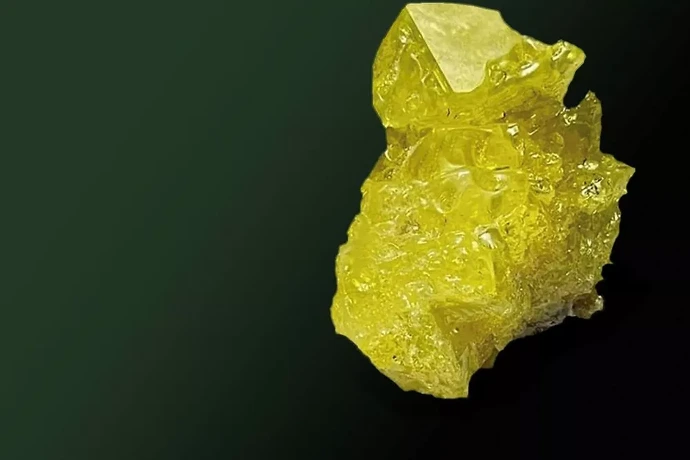
Unlike petrochemical alternatives, mineral
sulphur is naturally derived from mined sources. Exceptionally pure and stable,
it helps improve the wine’s organoleptic profile while allowing us to reduce
the quantities used without compromising protection.
Since the 2024 harvest, we have replaced the
use of chemical sulphites with natural mineral sulphur.
Indigenous yeasts – the unique signature of our terroir
Whenever we consider it most appropriate, we
favour indigenous yeasts to reveal our terroir, develop greater complexity and
create authentic wines.
Capturing the essence of our terroir and
creating unique, complex wines is at the heart of our ambition.
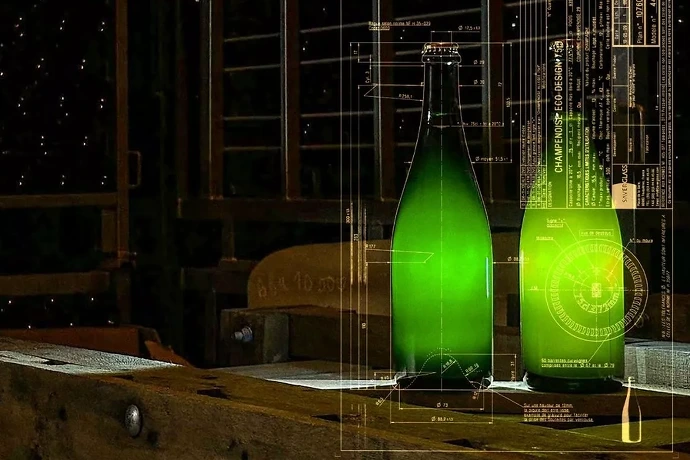
Ultra-lightweight bottles
The ultra-lightweight bottle: less glass, more
future. After several years using lighter 835 g bottles, we are taking another
step forward with an ultra-lightweight 800 g bottle.
It is a tangible choice for the environment and
for the future of our Champagnes: a 4% reduction in the carbon footprint of
production, lower transport emissions and 1,750 kg of glass saved each year for
50,000 bottles produced.
As the bottle alone represents around one third
of the sector’s carbon footprint, reducing its weight makes it a powerful lever
for greater sustainability.