Our Story
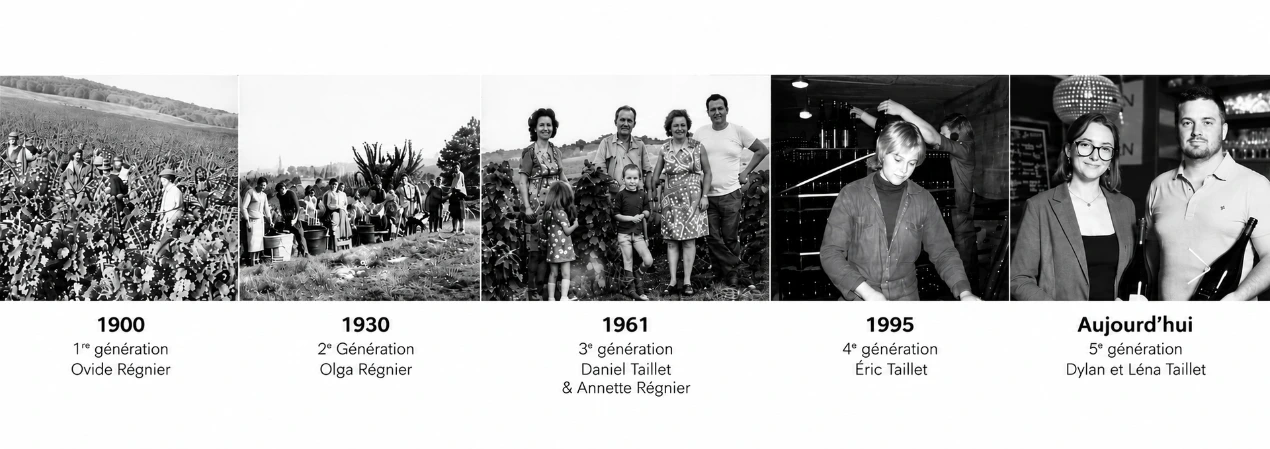
Nestled in the heart of the Vallée de la Marne, the estate was founded in the early 1900s, with the first bottles released in the 1950s.
Today, the estate is run by Dylan and Léna Taillet, the fifth generation of the family. More than ever, they remain committed to their philosophy of cultivating the vineyards with respect for the environment and in harmony with nature.
For Dylan and Léna Taillet, creators of emotions in Champagne, there is now one clear priority: exceptional harvests for exceptional Champagne.
As perfectionists, they strive to preserve a distinctive character and style in each of their Champagnes – a signature that can be recognised from the very first sip.
Philosophy
“I like to take part in the work of life by revealing and restoring the true expression of the terroir.” – Éric Taillet-Régnier
The relationship between the soil and the cuvée it produces lies at the heart of my philosophy today.
Tenter de transmettre à un consommateur l'énergie du sol au travers des bulles. Ma passion pour les sols amène à modifier foncièrement les méthodes culturales de la vigne.
“Meunier” – the king grape variety of the Vallée du Belval…
My life, my passion, my reason for being a winegrower.
The emblematic grape variety of the Taillet estate, Meunier comes exclusively from very old vines grown on living clay soils with subsoils of limestone, flint, marl and clay.
“For me, Meunier is about fruit, finesse, length on the palate and an extraordinary aromatic range.”
Vineyard Management
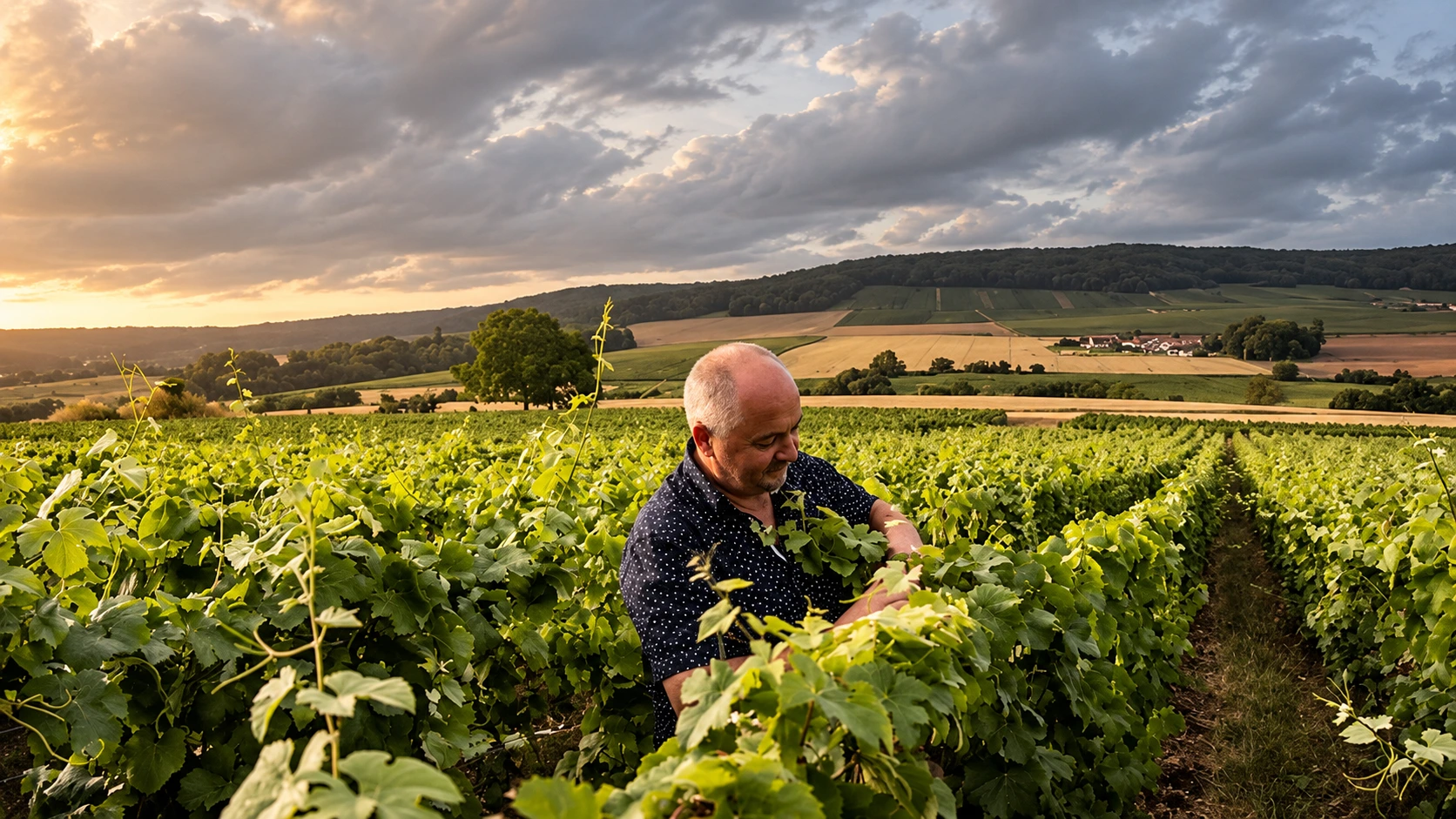
For many years, our vineyards have been cultivated without herbicides or fertilisers.
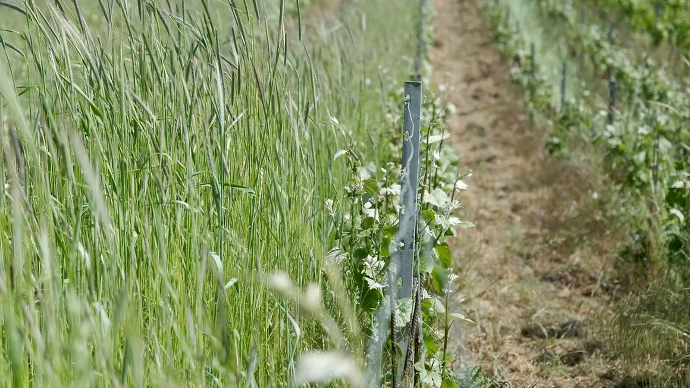
Our aim is to cultivate living soils. By adding organic matter, we encourage microbial life, deep secondary root development – allowing the terroir to reveal itself – and improved water retention.
Working the Soil: Back to the Roots
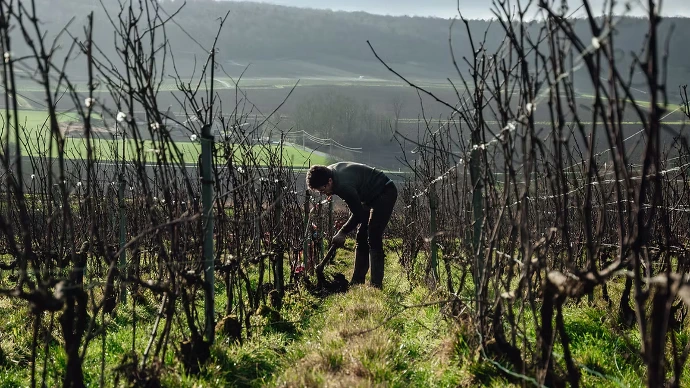
Our approach to soil management revolves around ploughing, working the soil and close mowing.
It is important to us to avoid compacting the soil and to stimulate the microorganisms naturally present within it.
Viti-Forestry
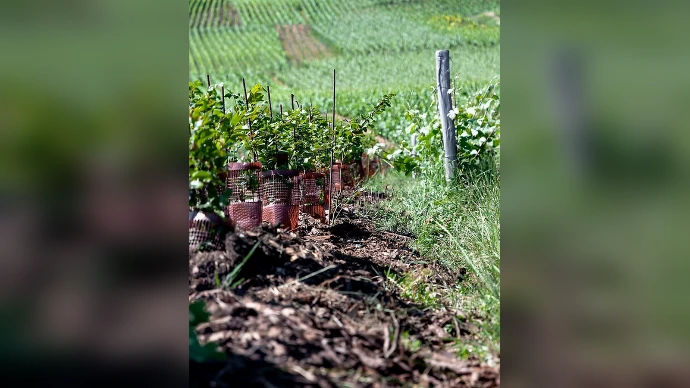
We planted 600 European beech trees around our “Sur le Grand Marais” vineyard parcel.
Why? To establish a system inspired by agroforestry, combining different species and creating multiple benefits:
🦠 Enhanced biological activity in the soil through organic matter and mycorrhizae
🐞 Natural pest management through beneficial organisms
💧 Improved water management through root exploration and natural purification
⛅ Greater climatic comfort through windbreak and shading effects
🌡️ Carbon storage
🌄 Beautification and diversification of our landscapes
Our Many Experiments
Every year, we carry out numerous experiments 🔎:
🌳 The planting of 600 European beech trees to attract birds, bees and insects and encourage biodiversity. The project is set to be continued.
🚜 Reducing the use of straddle tractors in favour of tracked vehicles or drones.
Winemaking
Pneumatic Presses 🕰️
Today, we use two Diemme pneumatic presses, each with a capacity of 4,000 kg, acquired in 2024.
This pressing system allows us to work with great precision during pressing and the separation of the must fractions.
Partial Vinification in Oak Barrels 🍇
For our winemaking, we use oak barrels, a 50-hl wooden cask and stainless-steel tanks ranging from 10 to 25 hl, allowing us to preserve and highlight the diversity of our individual vineyard parcels.
Particular Care During Winemaking 🤲
🍇 As soon as the harvest is complete, we allow the juices to rest and intervene as little as possible. The aim is to create a reductive environment that helps prevent oxidation while preserving the fruit.
❌ We use neither filtration nor cold treatment.
⚖️ Reserve wines are kept on fine lees in temperature-controlled stainless-steel tanks. We practise a thoughtful, restrained approach to winemaking, allowing the wines to express themselves naturally without harsh or excessive intervention.
Extended Ageing on Lees ⏳
After 15 months of ageing, our cuvées are placed sur pointe to extend their maturation and allow for a finer, longer and more delicate yeast autolysis.
One quarter of the production is aged under natural cork and staple, while the remainder is aged under crown cap.